
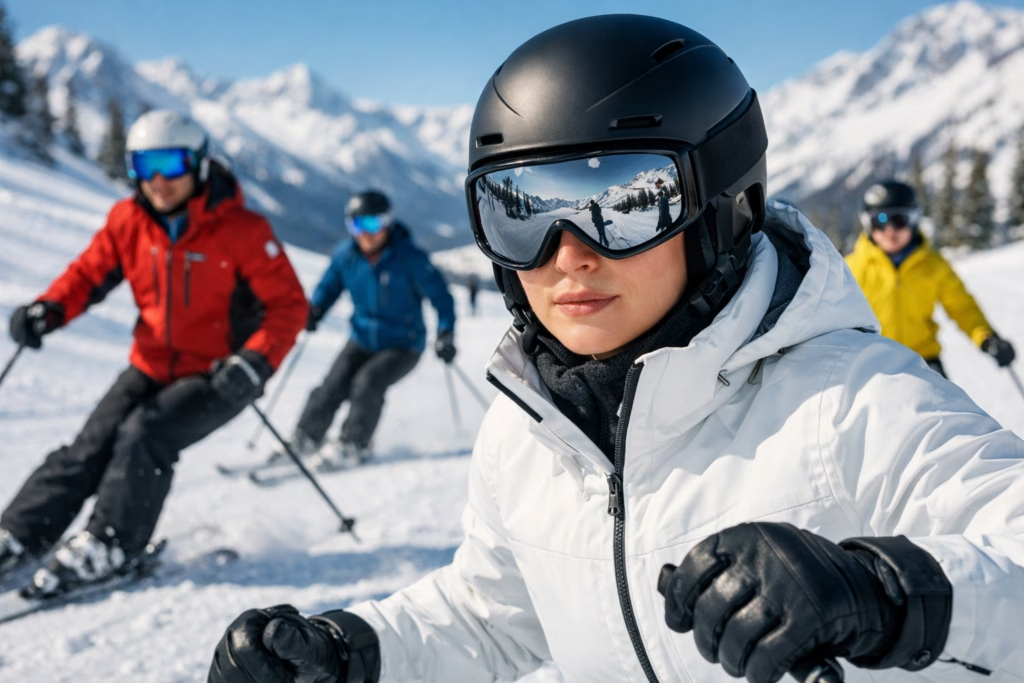
Safety is paramount. This applies not only to the choice of slopes and terrain, but also to choosing the right equipment, as the days of flowing hair and casually tucked sunglasses are long gone. Helmet use on the slopes is nearly 991% – and ski goggle refusers are almost exclusively found in the 60+ age group. Of course, there are also multifunctional sunglasses, but these are only practical if they fit under a helmet.
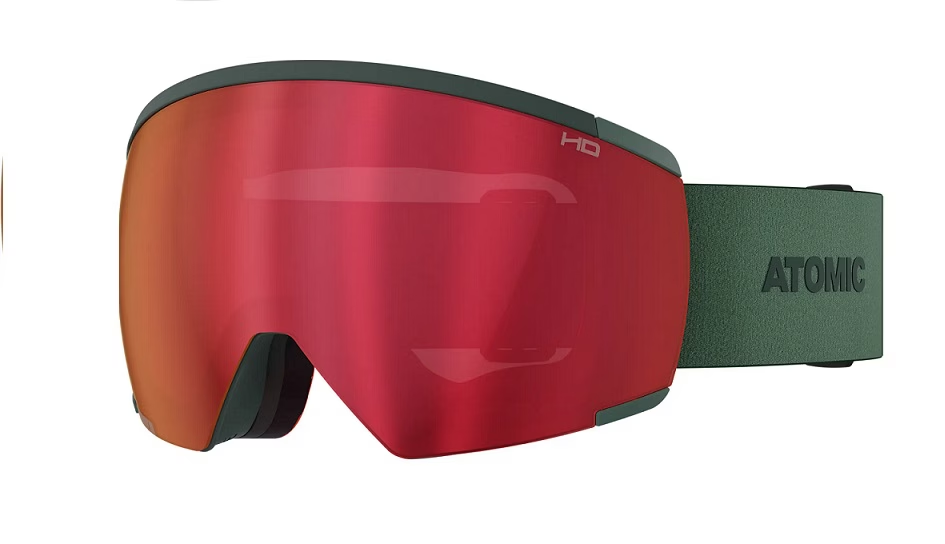
Ski goggles are now available in an incredible variety of colors and qualities – yet they are often undervalued. Helmets and protectors are effective after a fall – but perfect vision can prevent accidents in the first place. Therefore, pay attention to the condition of your ski goggles, as they are often scratched. Soggle, a Bavarian start-up, offers microfiber goggles with an elastic band and countless designs – including some of their own.
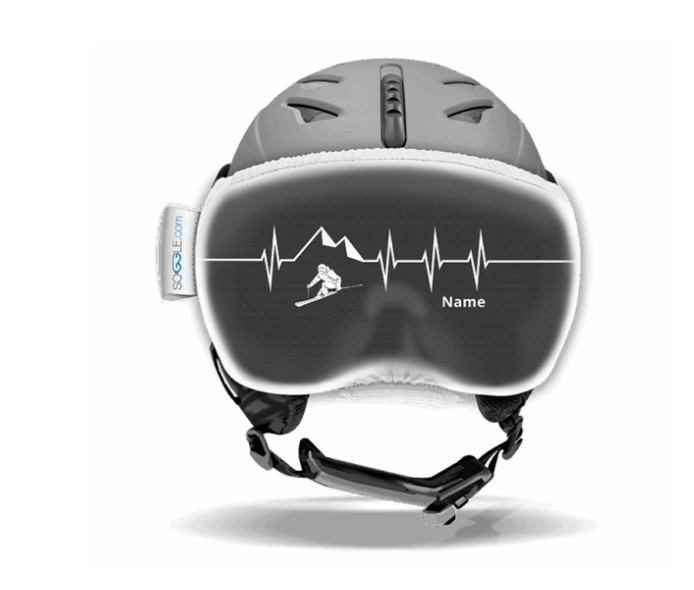
Of course, there are also lenses of varying quality. It's a fact that with top-of-the-line models, which can cost hundreds of euros, the lenses are the most important – and most expensive – component. Therefore, when buying, you should make sure that at least two lenses are included. For many people, however, the problem starts much earlier: namely, with impaired vision. Some still wear everyday glasses and a hat on the slopes, but the fun is over as soon as it snows.
Eyeglass wearers still struggle to fit their usual lenses under ski goggles. So what options are there besides relying solely on instinct? Many opt for prescription lenses, which offer no restrictions on their field of vision or choice of ski goggles. However, not everyone can tolerate lenses. Therefore, there are lens inserts for standard ski goggles, shaped to allow you to wear your regular glasses underneath. These are increasingly being replaced by "normal" ski goggles with cutouts in the frame that accommodate the temples of smaller prescription glasses or dedicated sports glasses. An innovation of recent years is ski goggles with magnetic lens inserts that allow for easy removal and replacement of the lens. These sometimes even have space for glasses underneath. A pleasant side effect of these magnetic systems is the ability to easily switch from sunglasses to fog glasses during the day on the slopes.
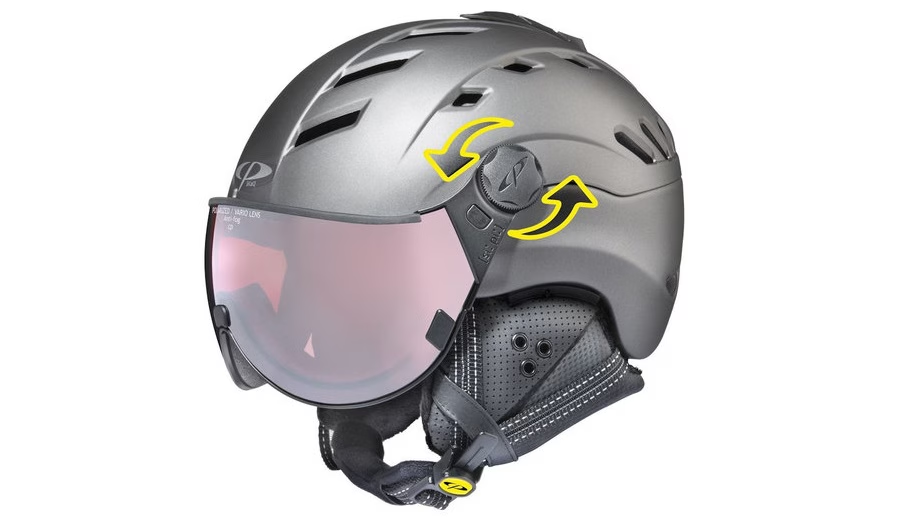
The complete solution – the visor helmet – is increasingly being touted, not just for users of prescription glasses. However, even with this option, there's no guarantee that prescription glasses won't fog up underneath. Incidentally, for optimal protection, it's generally crucial that the helmet fits perfectly. Besides the various helmet sizes, fine-tuning is essential. This is most easily achieved with a built-in cushion – leading manufacturers now incorporate this feature. Another recommendation is to use the same brand of helmet and ski goggles.
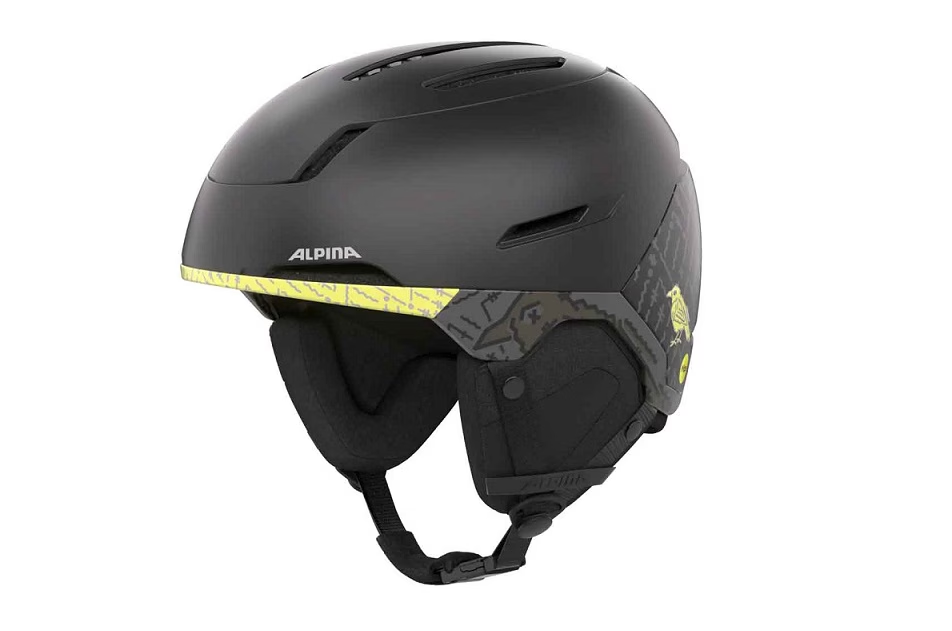
Manufacturers are responding strongly to the touring trend. Anyone who sweats on the ascent simply needs a lighter, better-ventilated helmet. It's no secret, however, that most ski tourers use lighter head protection like a hat or headband on the climb. While head protection has been undisputed since Michael Schumacher's tragic accident, the importance of back protection is largely ignored. But for freeriders, and especially young people, back protectors are increasingly becoming part of their gear – likely also because they have now become a fashionable item of clothing.